
Premature Baby in the NICU: A Singapore Parent’s Guide
Your premature baby is in the NICU. What happens in Singapore's neonatal units, how you can help, costs and MediShield Life, going home and follow-up care.
 Babylove Editorial Team
Published
6 min read
Babylove Editorial Team
Published
6 min read
In this guide
A premature baby is one born before 37 weeks of pregnancy. In Singapore, about 8.5 per cent of babies, or roughly 3,000 a year, arrive early, according to KKH. Many late preterm babies need only a short stay in a special care nursery, while those born very early may spend weeks or months in a neonatal intensive care unit (NICU). Singapore’s neonatal units are among the best in the world, and most premature babies go home healthy.
If your baby has just been admitted, this guide walks you through what the NICU is like, how you can help your baby, what it may cost, and what to expect when you finally take them home.
How early is premature?
Doctors group premature babies by how many weeks of pregnancy they were born at, because the earlier the birth, the more support a baby usually needs.
| Category | Born at | What it often means |
|---|---|---|
| Late preterm | 34 to under 37 weeks | Often a short stay; may need help with feeding, temperature or jaundice |
| Moderately preterm | 32 to under 34 weeks | Usually a special care or NICU stay of a few weeks |
| Very preterm | 28 to under 32 weeks | NICU care, often with breathing support and tube feeding |
| Extremely preterm | Under 28 weeks | Long NICU stay, intensive support and close follow-up |
Every baby is different. Your neonatologist will give you the most accurate picture of your own baby’s needs, and it is fine to ask the same question more than once.
NICU and special care in Singapore
Neonatal units come in different levels. A special care nursery (SCN) looks after babies who need monitoring, warmth, feeding help or phototherapy. A NICU provides the most intensive care, including ventilators and support for the smallest babies.
KKH’s Department of Neonatology runs the largest neonatal unit in Southeast Asia and takes referrals from other hospitals, with a regional neonatal transport service. The NICU at NUH, part of the Khoo Teck Puat-National University Children’s Medical Institute, also cares for very premature and sick newborns, and is known for discharging one of the world’s smallest surviving babies, born at 212 grams. SGH and several private hospitals have neonatal units too, but the level of care differs, so if you are at risk of an early birth, ask your gynae where your baby would be looked after and whether a transfer might be needed.
What you will see
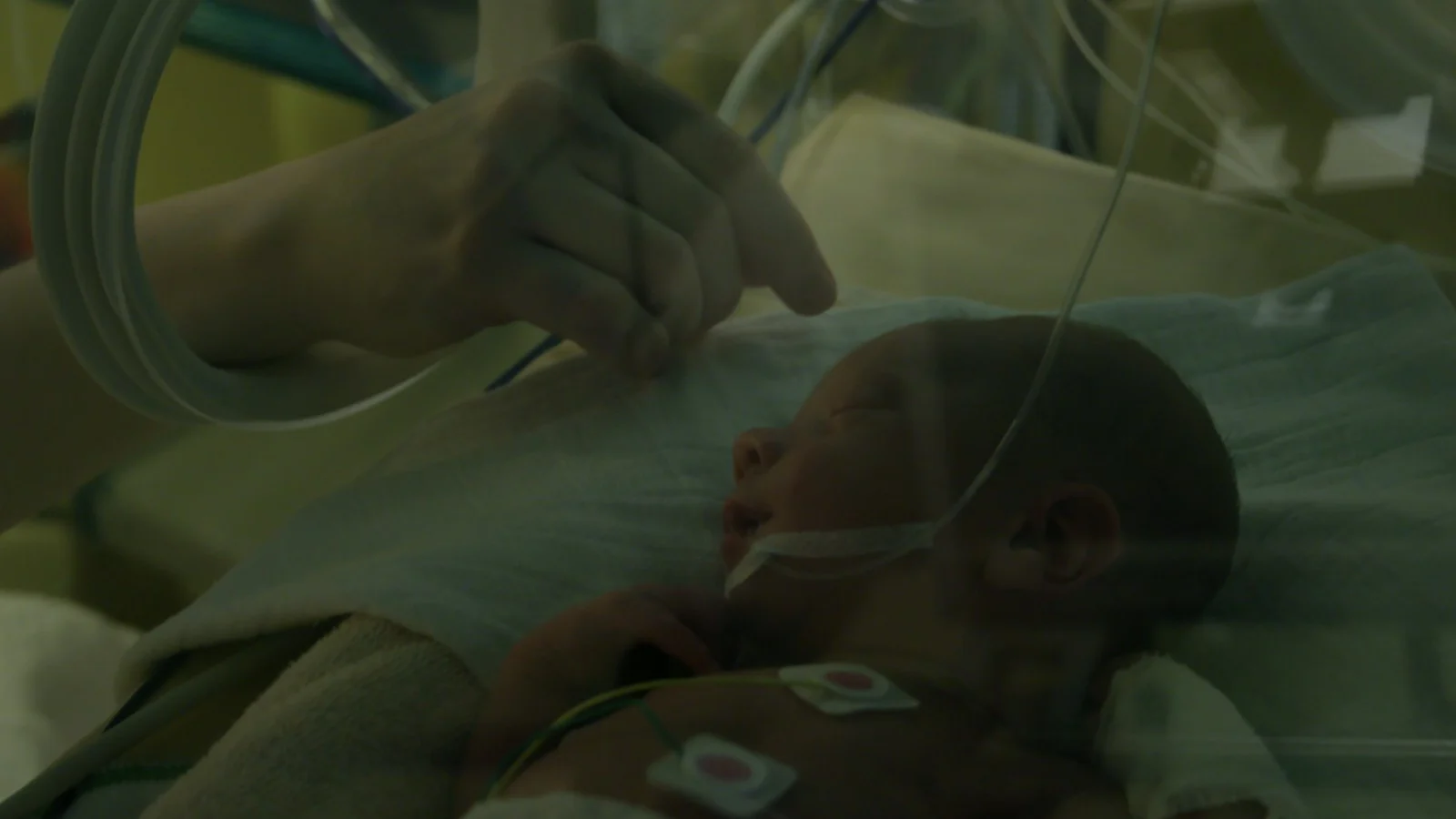
The first visit can be overwhelming. Your baby may be in an incubator to keep warm, with wires for monitors, a tube in the nose or mouth for feeding, a drip, and possibly breathing support. Alarms beep often, and most of the time they are routine. Ask the nurses to explain each piece of equipment. Knowing what everything does makes the space less frightening.
Common issues in premature babies
- Breathing: immature lungs may need oxygen, CPAP or a ventilator.
- Feeding: babies born before about 34 weeks often cannot yet coordinate sucking, swallowing and breathing, so they are tube-fed at first.
- Temperature: they have little body fat and lose heat quickly.
- Jaundice: more common and sometimes more pronounced. Our newborn jaundice guide explains phototherapy. Babies with G6PD deficiency are watched especially closely.
- Infection: their immune systems are immature, which is why hand hygiene is strict.
- Eyes and brain: very premature babies are screened for retinopathy of prematurity (ROP) and may have head ultrasounds.
How you can help your baby
It is easy to feel like a visitor in the NICU, but you are your baby’s parent and your presence matters.
Skin-to-skin (kangaroo) care
Once your baby is stable, the nurses can help you hold them skin to skin on your bare chest. Kangaroo care is linked to more stable breathing and heart rate, better temperature control, better sleep and better breastfeeding. Dads can do it too.
Breast milk
Breast milk is especially protective for premature babies, lowering the risk of serious gut infections. Start expressing as soon as you can after birth, ideally within the first few hours, and aim for around eight or more sessions in 24 hours, including one at night. Even tiny amounts of colostrum are valuable. If your own supply is not yet enough, babies at KKH may be offered screened donor milk from the KK Human Milk Bank. Our guide to increasing breast milk supply has practical tips for pumping mums. If latching stays difficult once your baby moves on to the breast, a lactation consultant can check for issues such as a tongue-tie affecting feeding.
Being part of the team
Join ward rounds if you are invited, keep a notebook of questions, and learn to do nappy changes, mouth care and temperature checks. Ask about parent support groups: KKH’s Early Bird Baby Club supports parents of babies born under 1,500 grams, and NUH has a neonatal parental support group. Our guide to caring for the cord stump is handy for those early nappy changes.
Costs, MediShield Life and MediSave
NICU care is expensive, and bills depend heavily on how long your baby stays, the level of care, and whether you choose a public or private hospital and ward class. A long stay can run into tens of thousands of dollars, particularly in a private hospital, so ask the hospital for an estimate and regular updates.
- MediShield Life: Singapore Citizen and PR newborns are covered from birth, including for congenital and neonatal conditions. Claims are subject to deductibles, co-insurance and claim limits.
- MediSave: your baby’s MediSave account receives the MediSave Grant for Newborns, currently S$5,000 for Singapore Citizen babies born from 1 April 2025, which can be used towards hospital bills. Parents’ MediSave can also usually be used, within withdrawal limits.
- Private insurance: many maternity and newborn plans exclude or cap congenital and neonatal conditions. Check the fine print, ideally before you give birth.
- Help with costs: if bills are a worry, ask to speak to a medical social worker early. MediFund may be available for families who need it.
Baby Bonus cash gifts and the CDA still apply for babies born before the new SG Child Support Package takes over from April 2027. See our Child Support Package guide for the changes.
Going home
Most premature babies go home around their original due date, but some leave earlier and some later. Rather than a set weight or date, doctors generally look for a baby who:
- Breathes steadily without support, or on a home oxygen plan if needed
- Keeps warm in an open cot
- Takes all feeds by breast or bottle and gains weight steadily
- Has had no worrying pauses in breathing for some days
Before discharge, you will usually be taught feeding, safe sleep, giving medicines and baby CPR. Room-in overnight if the hospital offers it. Make sure your baby’s newborn screening, including the hearing test, is done. Our guide to newborn hearing screening explains the process.
Follow-up care and corrected age
Premature babies usually have more follow-up than full-term babies, which may include neonatal, developmental, eye and hearing clinics. Keep these appointments even when all seems well, as some issues are easier to treat when caught early.
When tracking milestones, use your baby’s corrected age: their age from birth minus the number of weeks they were born early. A baby born eight weeks early who is six months old is assessed like a four-month-old. Doctors usually correct until around age two. Vaccinations, however, normally follow your baby’s actual age from birth, so ask your doctor about any extra protection your baby may need.
Red flags after you go home
Call 995 or go to the Children’s Emergency at KKH or NUH if your baby:
- Has pauses in breathing, breathes very fast or with effort, or turns blue or grey
- Is floppy, unusually sleepy or hard to wake
- Has a temperature of 38°C or higher, or is unusually cold
- Refuses several feeds, vomits repeatedly or has far fewer wet nappies
- Has a seizure
The bottom line
A premature baby in the NICU is one of the hardest experiences a parent can face, but Singapore’s neonatal teams are highly experienced and most babies do well. Spend time with your baby, try kangaroo care, express breast milk if you can, and ask questions. Check your MediShield Life and insurance cover early, keep up with follow-up appointments, and use corrected age for milestones. Above all, look after yourself as well as your baby.
How long will my premature baby stay in the NICU?
It depends on how early they were born and how they progress. A common rule of thumb is that many babies go home around their original due date, but late preterm babies may leave within days, while extremely premature babies may stay for several months.
Can I breastfeed a premature baby?
Yes. Most premature babies start with expressed breast milk through a tube, then move to the breast or bottle as they mature. Expressing early and often helps build your supply until your baby can feed directly.
Does MediShield Life cover the NICU?
MediShield Life covers Singapore Citizen and PR newborns from birth, including congenital and neonatal conditions, but only part of the bill, subject to deductibles, co-insurance and claim limits. MediSave and the MediSave Grant for Newborns can help with the rest.
What is corrected age?
Corrected age is your baby’s age from birth minus the weeks they were born early. It gives a fairer picture of development, and doctors usually use it until around two years old.

This article is for general information and does not replace advice from your doctor, midwife or paediatrician. Spotted something out of date? Tell us.