Newborn Hearing Test in Singapore: Screening and Results
How the newborn hearing test works in Singapore: OAE and AABR screening, what a 'refer' result means, follow-up at KKH or NUH, and hearing signs to watch.
 Babylove Editorial Team
Updated
6 min read
Babylove Editorial Team
Updated
6 min read
In this guide
Every baby born in a Singapore hospital is offered a hearing screening test, usually in the first few days after birth and before you go home. It is quick, painless and often done while your baby sleeps. Most babies pass. If your baby gets a “refer” result, it does not mean they are deaf. It simply means they need a repeat or more detailed test, and many of those babies turn out to hear normally.
This guide explains why the hearing test for newborns matters, how the two screening methods work, what the results mean, what happens next if your baby does not pass, and the hearing milestones to watch as your baby grows.
Why newborns are screened
Hearing loss is one of the more common conditions present at birth. KKH estimates that about one in 1,000 babies in Singapore is born with significant hearing impairment, and other local estimates are higher. Babies with hearing loss usually look and behave like any other newborn, and many still startle to loud noises, so it is easy to miss without a test.
Hearing is essential for speech and language. Babies whose hearing loss is picked up early and who get support, ideally by six months of age, have a much better chance of developing language on track. Before universal screening, hearing loss was often only noticed when a toddler was late to talk.
Singapore has screened newborns’ hearing for decades. NUH began mass screening in the 1990s, and KKH introduced universal newborn hearing screening in 2002. In KKH’s early years of the programme, 99.8 per cent of eligible babies were screened, well above the international benchmark of 95 per cent.
How the newborn hearing test works
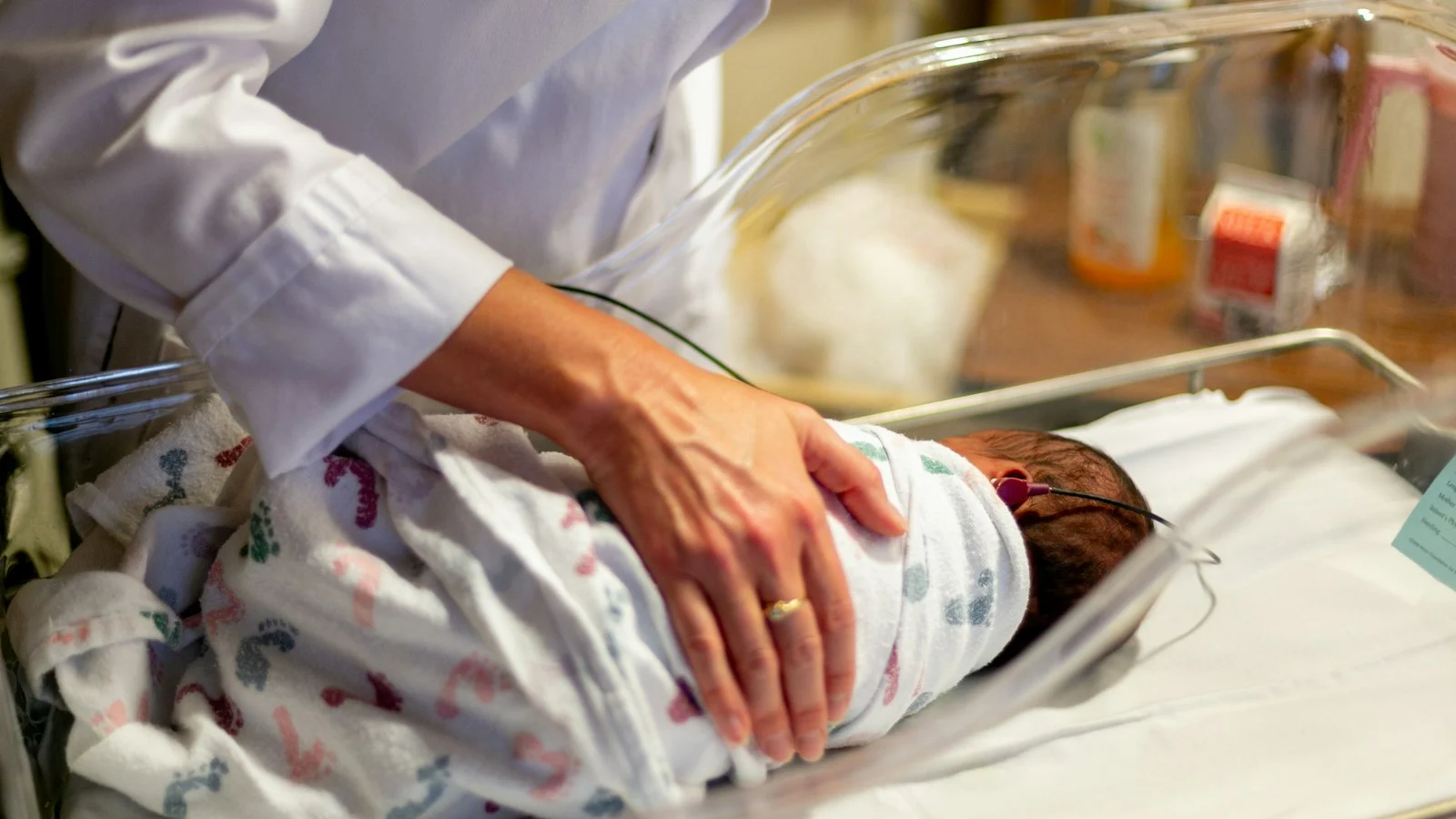
The screening takes around 15 to 30 minutes and is done by trained staff at your bedside or in a quiet room on the ward. It works best when your baby is calm or asleep, so it is often timed after a feed. There are two methods, and hospitals use one or both.
| OAE (otoacoustic emissions) | AABR (automated auditory brainstem response) | |
|---|---|---|
| How it is done | A small soft probe is placed in the ear canal and plays gentle clicking sounds | Small sensors are placed on the head and soft earphones or ear cups play clicking sounds |
| What it measures | The echo produced by a healthy inner ear (cochlea) | The response of the hearing nerve and brainstem to sound |
| Good to know | Very quick; can be affected by fluid or debris in the ear in the first days | Checks more of the hearing pathway; often used for babies at higher risk, such as those who needed NICU care |
Neither test hurts, and your baby does not need to do anything. You can usually stay with your baby throughout.
Understanding the results
Pass
A pass means your baby’s hearing was within the expected range on the day of the test. It is reassuring, but it does not guarantee your baby’s hearing will stay normal. Some hearing loss develops later, so keep watching your child’s responses as they grow.
Refer
“Refer” is the term used when a baby does not pass the screen in one or both ears. It is common for this to happen in the first days of life, because:
- There may still be fluid or vernix in the ear canal or middle ear after birth
- Your baby was moving, crying or sucking during the test
- The ward was noisy
Your baby will normally be rescreened, either before discharge or at a follow-up appointment a few weeks later. In KKH’s programme, only about 0.5 per cent of babies screened were eventually referred on for full audiology tests, which shows how many initial refers clear on rescreening.
What happens if your baby does not pass the rescreen
If the repeat screen is still a refer, your baby will be referred to an ENT (ear, nose and throat) specialist and an audiologist for diagnostic hearing tests. These are more detailed, may take longer, and are often done during a natural sleep. The aim is to confirm whether there is hearing loss, how much, and which part of the hearing pathway is affected.
Internationally, the target is screening by one month, diagnosis by three months and support starting by six months. If hearing loss is confirmed, support depends on the type and degree, and may include hearing aids, speech and language therapy, or cochlear implants for severe to profound loss. Your team will also look for causes, which may include tests for congenital infection or genetic factors.
Waiting for results is stressful. It can help to remember that hearing loss, if present, is very manageable with early support, and that many families in Singapore go through this pathway with good outcomes.
Babies at higher risk of hearing loss
Some babies are more likely to have hearing loss at birth or to develop it later, and may be offered closer follow-up even after passing the screen. Risk factors include:
- A family history of permanent childhood hearing loss
- A NICU stay, particularly a long one or one involving breathing support (see our premature baby and NICU guide)
- Severe jaundice that needed an exchange transfusion (our newborn jaundice guide explains treatment)
- Infections before or after birth, such as congenital CMV, or meningitis
- Certain syndromes or differences in the shape of the head, face or ears
- Some medicines given in hospital that can affect hearing
Repeated ear infections and glue ear can also cause temporary hearing problems in older babies and toddlers.
If your baby was born at home or overseas
If your baby missed the hospital screen, for example because they were born overseas, discharged early or born at home, ask your paediatrician or polyclinic doctor to arrange a hearing test as soon as possible, ideally within the first month. Screening is most accurate and most useful in the early weeks.
Hearing milestones to watch
Keep an eye on how your baby responds to sound as they grow, and use the hearing checklist in your child’s health booklet. As a rough guide, your baby should:
- From birth: startle or blink at sudden loud sounds, and settle to your voice
- By about 3 months: quieten or smile when you talk, and coo
- By about 6 months: turn their eyes or head towards sounds, and babble
- By about 9 to 12 months: respond to their name, understand simple words like “bye-bye”, and use babble with speech-like sounds
Our guide to baby speech milestones has more detail. If you have any concerns about your baby’s hearing at any age, even after a pass, tell your doctor. You can ask for a referral for a hearing assessment. Trust your instinct: parents are often the first to notice.
Hearing screening is one of several newborn checks done in hospital. The full newborn examination also checks the genitals, and our guide to an undescended testicle in newborn boys explains what follows if a testicle hasn’t come down. See our first-year check-ups guide for what comes after you go home. If you are planning a newborn photoshoot in Singapore, try to book it around any rescreen appointment.
The bottom line
The newborn hearing test in Singapore is a quick, painless screen done before you leave hospital, using OAE, AABR or both. A pass is reassuring, and a refer is common and usually just means a rescreen. If your baby still does not pass, go to every follow-up appointment, as early diagnosis and support by around six months makes a real difference to speech and language. Keep watching your child’s responses to sound as they grow.
Is the newborn hearing test compulsory in Singapore?
It is offered to all babies born in Singapore hospitals as part of routine newborn care, and almost all parents accept it. Talk to your hospital if you have concerns, but the test is safe, painless and strongly recommended.
Does a refer result mean my baby is deaf?
No. Many babies get a refer result in the first days because of fluid in the ears, movement or noise. Most pass when they are rescreened. Only a small proportion go on to need full diagnostic tests.
How much does newborn hearing screening cost?
It is usually billed as part of your delivery and newborn charges, and the amount varies by hospital and ward class. Check your hospital’s package or ask the billing team if you need the exact figure.
My baby passed, but I am worried about their hearing. What should I do?
See your doctor and ask for a hearing assessment. A newborn screen checks hearing on the day of the test, and some hearing loss develops later. Your concern is reason enough to get it checked.

This article is for general information and does not replace advice from your doctor, midwife or paediatrician. Spotted something out of date? Tell us.