Postpartum Weight Loss Diet: A Realistic Singapore Guide
A realistic postpartum weight loss diet: safe timelines, breastfeeding calorie needs, hawker-friendly swaps, exercise progression and why crash diets fail.
 Babylove Editorial Team
Updated
6 min read

In this guide
Losing weight after pregnancy takes longer than most of us expect, and that is normal. HealthHub suggests aiming for about 1 to 2 kg a month if you are breastfeeding, and planning on a timeline of one to two years rather than weeks. The approach that works is unglamorous: regular balanced meals built on vegetables, wholegrains and lean protein, plenty of water, gradually building up to 150 minutes of moderate activity a week, and no crash diets.
This guide covers realistic timelines, how much to eat while breastfeeding, hawker-friendly choices, a safe exercise progression and why your mental health matters as much as the number on the scale. If you have a medical condition, had a complicated birth or had gestational diabetes, check with your doctor before changing your diet or exercise.
A realistic postpartum weight loss timeline
Much of the weight you gained in pregnancy is your baby, the placenta, amniotic fluid, extra blood and fluid, so a good chunk goes in the first few weeks without any effort. The rest is usually stored fat that your body laid down for breastfeeding, and that comes off more slowly.
| Time after birth | What is typical | Focus |
|---|---|---|
| First 2 weeks | Rapid loss of baby, placenta and fluid | Rest, eat well, drink to thirst, heal |
| Weeks 2 to 6 | Gradual loss as your womb shrinks and fluid settles | Gentle walks, pelvic floor exercises, regular meals |
| 6 weeks to 6 months | Slow, steady loss is realistic, around 1 to 2 kg a month | Build activity after your postnatal check; balanced plate |
| 6 to 12 months and beyond | Many women are close to their pre-pregnancy weight, but not all, and that is fine | Strength training, sustainable habits |
Your body shape may also change, with a softer tummy, wider hips or different breasts, even if you return to the same weight. That is not failure. If your tummy has a bulge down the middle, read our guide to diastasis recti after pregnancy, as exercise and time help more than dieting.
How much to eat while breastfeeding
Making breast milk uses a lot of energy. HealthHub suggests breastfeeding mums need roughly 330 to 400 extra kilocalories a day compared with before pregnancy, about one extra serving from each food group. That is why deliberately cutting calories hard while breastfeeding can leave you exhausted and, in some cases, affect your milk supply.
- Wait before dieting. Most experts suggest holding off on any deliberate calorie cutting until breastfeeding is well established, often around six to eight weeks.
- Cut back gently, not sharply. Small swaps, such as less sugar in drinks and fewer fried snacks, are usually enough to lose 1 to 2 kg a month.
- Eat to appetite. Breastfeeding hunger is real. Plan for it with filling, nutritious snacks rather than ignoring it.
- Drink water. Aim for about 2 litres a day, more in Singapore’s heat. Keep a bottle next to you at every feed.
Our breastfeeding diet guide covers the nutrients you need, fish and mercury, and caffeine. If you are formula-feeding, your calorie needs return to your usual level, so the same healthy habits apply without the extra portions.
What to eat: the healthy plate, Singapore style
Use HPB’s My Healthy Plate as your template: half your plate vegetables and fruit, a quarter wholegrains and a quarter protein. Build meals around:
- Lean protein at every meal: fish, chicken, eggs, tofu, tempeh, dhal and beans keep you full and help your body repair.
- Fibre: vegetables, fruit, brown rice, oats and wholemeal bread help with fullness and with postpartum constipation.
- Healthy fats in moderation: nuts, seeds, avocado and oily fish such as salmon and sardines.
- Fewer sugary drinks: bubble tea, kopi with condensed milk and packet drinks add up quickly. Try kopi-o kosong or kopi-c siu dai, and choose drinks with the Healthier Choice Symbol.
Hawker-friendly choices
| Instead of | Try | Why |
|---|---|---|
| Char kway teow or fried Hokkien mee | Sliced fish bee hoon soup | Less oil, more protein and fluids |
| Nasi lemak with fried chicken | Economic rice with two vegetables and a steamed or grilled protein, brown rice if available | Balanced plate, easy to control portions |
| Roasted chicken rice with skin | Steamed chicken rice, skin removed, less rice, extra vegetables | Lower in fat |
| Laksa or curry mee | Yong tau foo in clear soup with mostly vegetables and tofu | Skips the coconut milk gravy |
| Prata with curry | Thosai or chapati with dhal | Less oil, more plant protein and fibre |
| Sweet drinks with meals | Plain water or unsweetened tea | Easy daily sugar saving |
Asking for “less oil”, “less rice”, “more vegetables” or “gravy on the side” works at most stalls. You do not have to give up favourites; have them less often and pair them with a vegetable dish.
Snacks for night feeds
Keep easy options within reach so you do not end up with biscuits at 3am: fruit, unsalted nuts, plain yoghurt, wholegrain crackers, boiled eggs, overnight oats and cut vegetables with hummus.
Exercise after birth: a safe progression
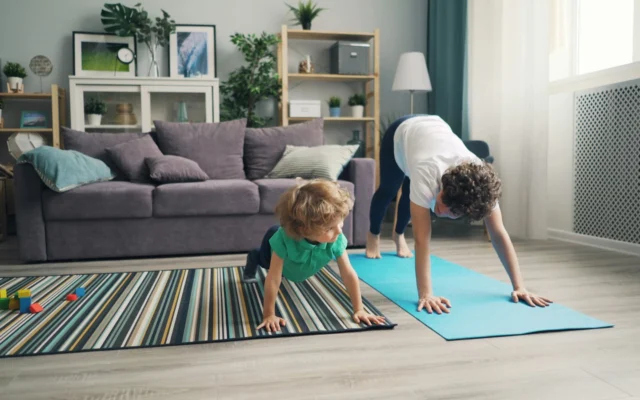
HealthHub recommends building up to at least 150 minutes of moderate-intensity aerobic activity a week, plus muscle-strengthening, once you are ready. Start slowly: exercise after birth is about recovery first, weight second. Our guide to getting moving after birth has more detail.
- From the first days: pelvic floor exercises and gentle walking around home, if your birth was uncomplicated. Our guide to pelvic floor exercises after birth has a plan.
- Weeks 2 to 6: gradually longer walks, ideally in the cooler morning or evening, perhaps with the stroller around your estate or a park connector.
- After your postnatal check at around 6 weeks: if your doctor agrees, add low-impact exercise such as postnatal yoga or Pilates, stationary cycling and bodyweight strength work. Swimming is usually fine once your bleeding has stopped and any wounds have healed. The same appointment is a good time to discuss your contraception choices.
- From about 12 weeks: consider running or higher-impact classes only if you can walk briskly, climb stairs and lift without leaking, heaviness or pain.
After a caesarean, recovery takes longer. Follow your surgeon’s advice and avoid heavy lifting and abdominal exercises until your wound has healed.
Why crash diets backfire
Very low-calorie diets, meal-replacement-only plans, detox teas and “slimming” supplements are tempting when you want your old body back. HealthHub warns against crash diets, and for new mums they are a particularly bad fit:
- They can leave you exhausted when you are already short of sleep.
- Rapid weight loss while breastfeeding may affect your milk supply.
- They are hard to sustain, so the weight often returns.
- Some slimming products sold online contain undeclared drugs. Avoid products that promise fast results, and check with your doctor or pharmacist before taking any supplement while breastfeeding.
Confinement food can be rich, with sesame oil, rice wine and generous portions. It is fine to enjoy it during your first month; our confinement food guide explains the traditions and simple ways to add more vegetables.
Your mental health matters more than the scale
Social media makes it look as if everyone “bounces back” in weeks. In reality, many women take a year or more, and some keep a few extra kilograms for good. Constant comparison and pressure, whether from yourself, relatives or others, can fuel low mood and disordered eating. Other changes, such as hair shedding a few months after birth, are also normal and usually temporary.
- Focus on how you feel: energy, strength, sleep and mood, rather than daily weigh-ins. Weighing weekly or monthly is enough.
- Choose activities you enjoy, ideally with other mums, for company as well as fitness.
- Sleep deprivation increases cravings. Protect sleep where you can, and share night feeds if possible.
The bottom line
Give yourself time: about 1 to 2 kg a month is a healthy pace, and a year or more to reach your goal is normal. Eat regular meals built on vegetables, wholegrains and lean protein, make simple hawker swaps, drink water and build up to 150 minutes of activity a week after your postnatal check. Skip crash diets and slimming products, especially while breastfeeding, and be kind to yourself. HealthHub’s guide to the postpartum weight loss journey has more tips, and our postpartum section covers the rest of your recovery.
How fast can I lose weight after giving birth?
A healthy pace is about 1 to 2 kg a month, according to HealthHub. Most mums lose a fair amount in the first weeks, then more slowly over months. Plan on a year or more to return to your pre-pregnancy weight.
Does breastfeeding help you lose weight?
It can. Breastfeeding uses extra energy, and HealthHub suggests you need about 330 to 400 extra kilocalories a day. But hunger rises too, so results vary. Eat balanced meals and avoid cutting calories sharply.
When can I start exercising to lose weight after birth?
Gentle walking and pelvic floor exercises can usually start within days of an uncomplicated vaginal birth. Most mums add more structured exercise after their postnatal check at around six weeks, and wait longer after a C-section.
Is it safe to diet while breastfeeding?
Gentle weight loss through healthy eating is generally safe once breastfeeding is established. Avoid crash diets, meal replacements and slimming products, which may affect your energy and milk supply.

This article is for general information and does not replace advice from your doctor, midwife or paediatrician. Spotted something out of date? Tell us.