
Measles in Children: Symptoms, MMR Vaccine and Singapore Advice
Measles in children: symptoms day by day, the MMR vaccine at 12 and 15 months in Singapore, travel advice, home care and when to call 995 or go to A&E.
 Babylove Editorial Team
Published
5 min read
In this guide
Measles is a highly infectious viral illness that starts like a bad cold, with fever, cough, runny nose and red eyes, and is followed a few days later by a blotchy rash that spreads from the face downwards. Most children recover, but measles can cause serious complications, especially in babies too young to be vaccinated.
The good news is that two doses of the MMR vaccine, given at 12 and 15 months in Singapore, protect very well. This guide covers measles symptoms day by day, the vaccine schedule, what to do before you travel, and when to see a doctor.
What is measles?
Measles is caused by the measles virus, which spreads through the air when an infected person coughs, sneezes or even breathes. The virus can hang in the air of a room for a while after the person has left, which is why it spreads so easily in clinics, childcare centres and on flights.
It is one of the most contagious infections known. A person with measles is infectious from around four days before the rash appears until four days after, so they can pass it on before anyone realises what it is.
In Singapore, measles is a legally notifiable disease. Doctors must report suspected cases to the Communicable Diseases Agency (CDA) so that contacts can be traced and outbreaks contained.
Measles symptoms: a day-by-day timeline
Symptoms usually appear around 10 to 12 days after contact with an infected person, although the incubation period can range from about 7 to 21 days. Measles tends to follow a recognisable pattern.
| Stage | Typical timing | What you may notice |
|---|---|---|
| Incubation | About 7 to 21 days after exposure (often 8 to 14) | No symptoms yet |
| Early (prodrome) | First 2 to 4 days of illness | Fever that climbs, cough, runny nose, red and watery eyes, tiredness, poor appetite |
| Koplik spots | A day or two before the rash | Tiny white or bluish-white spots inside the cheeks |
| Rash | Around day 3 to 5 of illness | Red-brown blotchy rash that starts on the face and behind the ears, then spreads down the body; fever is often highest now |
| Recovery | Rash fades after about a week | Cough can linger for a couple of weeks; your child may stay tired for a while |
The measles rash is not usually itchy, and the spots may join together into larger patches.
Who is most at risk?
Anyone who is not immune can catch measles, but some people are more likely to become seriously ill:
- Babies under 12 months, who are too young for their routine MMR dose
- Children who have not had both doses of the vaccine
- People with weakened immune systems, such as children having cancer treatment
- Pregnant women who are not immune, as measles can lead to premature birth or low birth weight
Complications include ear infections, diarrhoea, pneumonia and, rarely, encephalitis (inflammation of the brain), which can cause seizures, lasting disability or death. There is no specific antiviral treatment, so prevention matters.
The MMR vaccine in Singapore
Measles vaccination is compulsory for children in Singapore under the National Childhood Immunisation Schedule (NCIS). Children get two doses:
- Dose 1 at 12 months: MMR (measles, mumps and rubella), given as a separate jab from the chickenpox vaccine
- Dose 2 at 15 months: usually given as MMRV, which combines MMR with the chickenpox vaccine
The first dose is given as separate MMR and chickenpox jabs because using the combined MMRV as dose 1 in children aged 12 to 47 months carries a slightly higher risk of febrile seizures. Our full baby vaccination schedule for Singapore shows where MMR fits alongside the other jabs, plus costs and subsidies at polyclinics and CHAS GPs.
Two doses give very strong, long-lasting protection. Common side effects are mild, such as a sore arm or leg, and some children develop a fever or a faint rash about a week to 10 days later. This is not infectious. Missed a dose? Ask your polyclinic or GP about catching up.
Travelling with a baby or toddler
Measles outbreaks happen in many countries, including some popular holiday destinations in the region and further afield. The CDA advises everyone to be fully vaccinated against measles before travel.
- Babies aged 6 to 11 months travelling to places with outbreaks can have one early dose of MMR at least two weeks before departure. This dose does not count towards the routine schedule, so your baby still needs the usual doses at 12 and 15 months.
- Toddlers who have had only one dose may be able to have the second dose earlier, as long as it is at least four weeks after the first. Ask your doctor.
If your child becomes unwell with fever or a rash after a trip, tell the doctor where you have been.
What to do if you think your child has measles
Call your GP or polyclinic before you go in. Explain that you suspect measles, so they can arrange to see you in a way that keeps other patients, including young babies and pregnant women, safe.
At home, care is about comfort while the illness runs its course:
- Offer plenty of fluids, such as breast milk, formula or water, and small, frequent meals
- Use paracetamol or ibuprofen for fever and discomfort if your child is distressed, following the label or your doctor’s advice (do not give aspirin to children)
- Dim the lights if their eyes are sore, and gently wipe crusts from the eyes with clean, damp cotton wool
- Keep your child home from childcare or school until your doctor says they are no longer infectious, usually at least four days after the rash appears
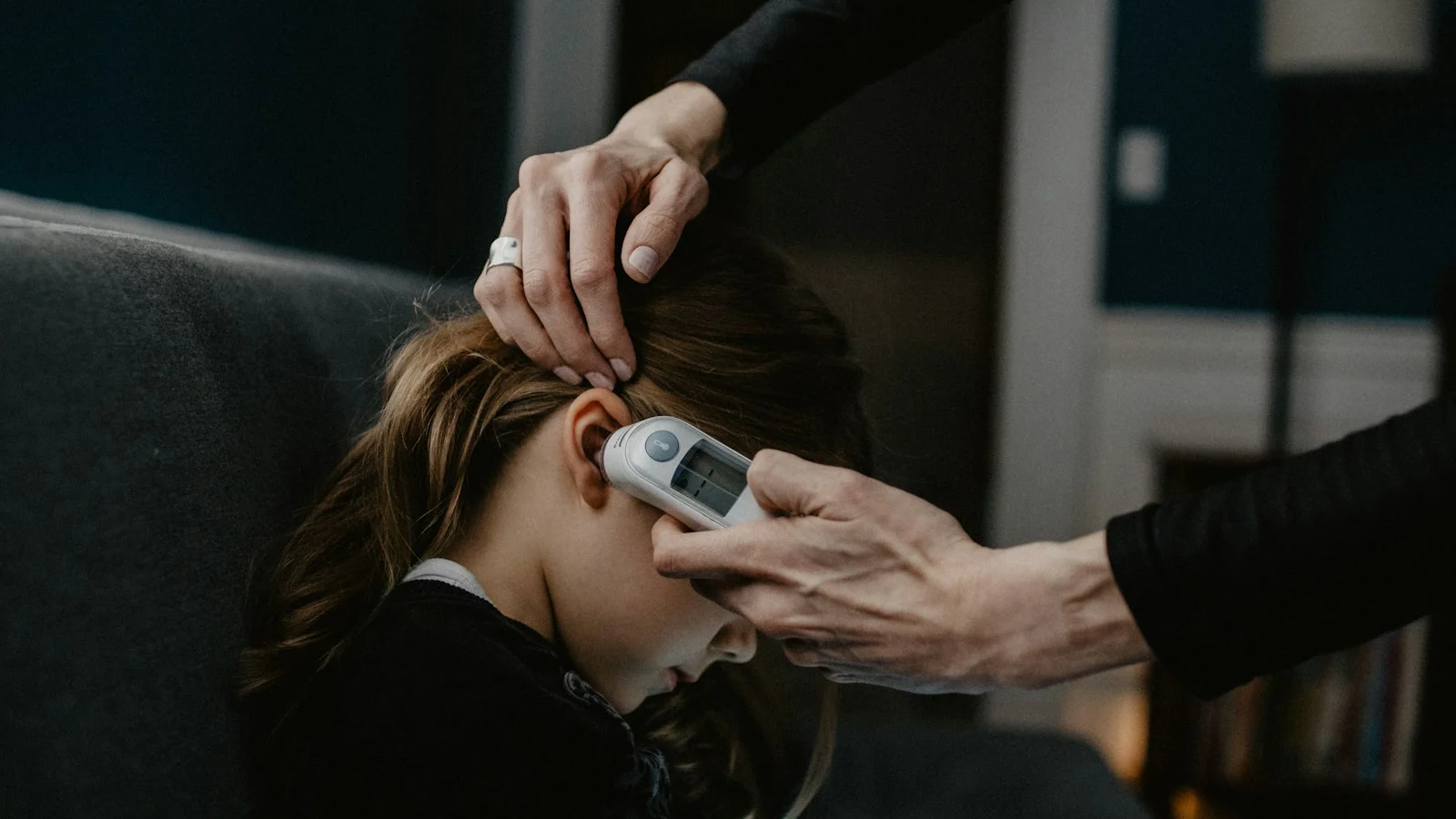
Our guide to baby fever covers temperature taking and how to keep a feverish child comfortable.
If your child has been exposed
If your child is unvaccinated or too young for MMR and has been in contact with someone with measles, call your doctor straight away. Giving the vaccine within about three days, or an antibody injection (immunoglobulin) within about six days for babies and other vulnerable people, may prevent the infection or make it milder.
Red flags: when to seek urgent help
See a doctor the same day if the fever lasts more than a few days, keeps returning after the rash appears, or your child develops ear pain or a worsening cough.
The bottom line
- Measles starts with fever, cough, runny nose and red eyes, followed by a rash spreading from the face a few days later.
- It is extremely contagious from about four days before to four days after the rash appears, and it is notifiable in Singapore.
- Two doses of the MMR vaccine, at 12 and 15 months, give strong protection. Babies aged 6 to 11 months can have an early dose before travel to outbreak areas.
- Call the clinic before visiting, and seek urgent help for breathing difficulty, seizures, drowsiness or dehydration.
For the official details, see the Communicable Diseases Agency’s measles page.
Can my baby get measles before their first MMR jab?
Yes. Babies may get some protection from their mother’s antibodies in the first months, but this fades, and babies under 12 months are among those most at risk of complications. Good hand hygiene and avoiding contact with anyone who is unwell help. If you are travelling to a place with an outbreak, ask your doctor about an early MMR dose from 6 months.
Can a vaccinated child still get measles?
It is uncommon. Two doses of MMR protect around 97 out of 100 people, so a small number of vaccinated people can still catch it, but they usually have a milder illness and are less likely to spread it.
How long is a child with measles contagious?
From around four days before the rash appears until four days after it appears. Keep your child at home and away from babies, pregnant women and anyone with a weak immune system during this time, and follow your doctor’s advice on returning to childcare or school.

This article is for general information and does not replace advice from your doctor, midwife or paediatrician. Spotted something out of date? Tell us.


